


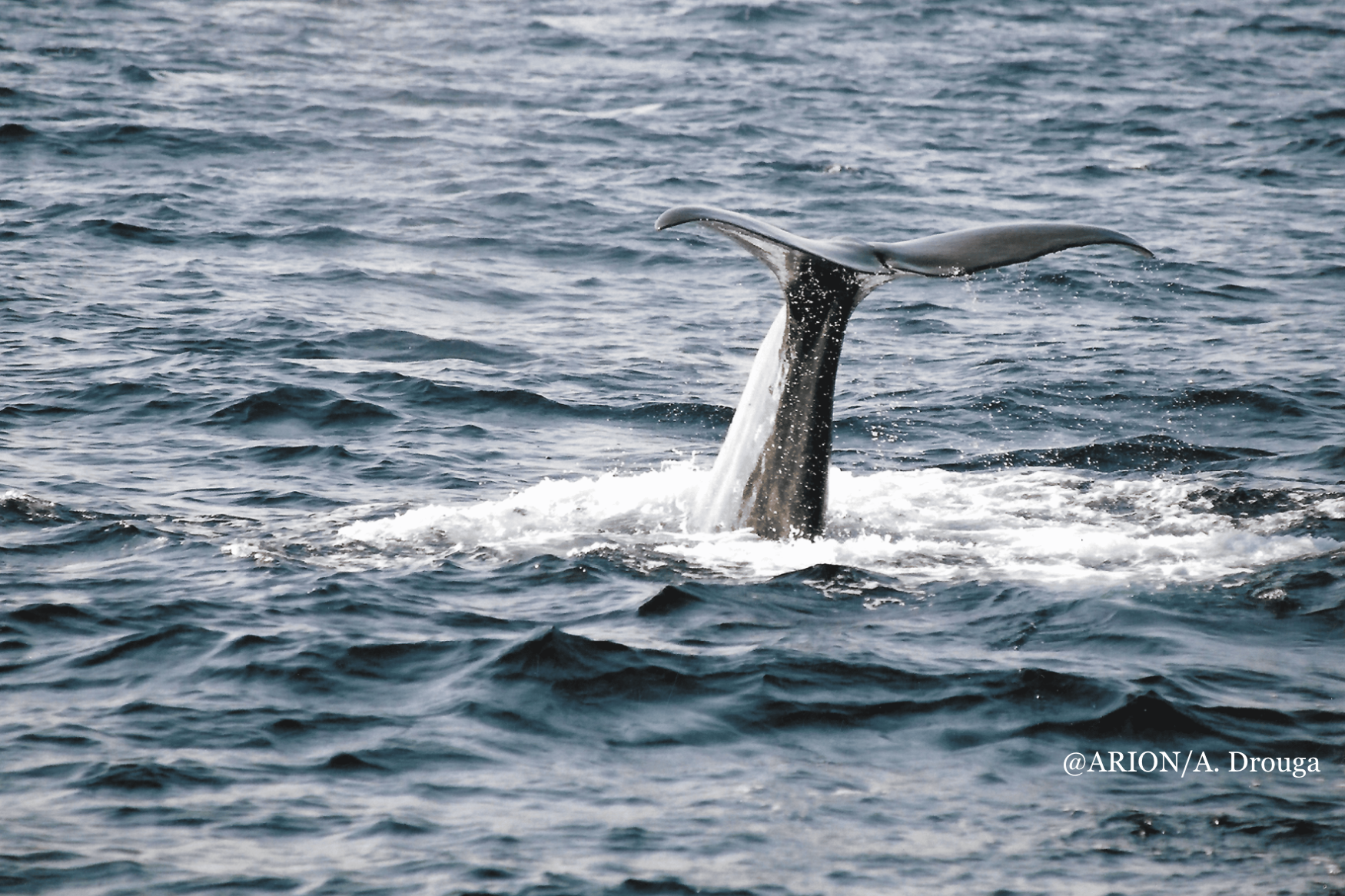
Sighting of a baleen whale in the Pagasitikos Gulf
Effective July 25, 2026, the “Cetacean Rescue and Rehabilitation Research Center -ARION, in its capacity as “Coordinator of the Cetacean Stranding Management Team of the ‘Nationally Coordinated Network for the Monitoring and Management of Stranding Incidents Involving Marine Wildlife’ (Government Gazette B’ 3376/May 19, 2023), was informed by the Volos Central Port Authority, commercial fishermen, and members of the public of the presence of a fin whale within the Pagasetikos Gulf.
From the very beginning, the incident monitoring process was initiated, involving the collection and evaluation of photographic and video footage, as well as the recording of observations by the agencies involved. Based on the data available to date, the animal appears to be an adult and in good physical condition. Its behavior is characterised as normal, as repeated breaches (jumping out of the water), active feeding, and particularly positive signs regarding its physical condition have been recorded.
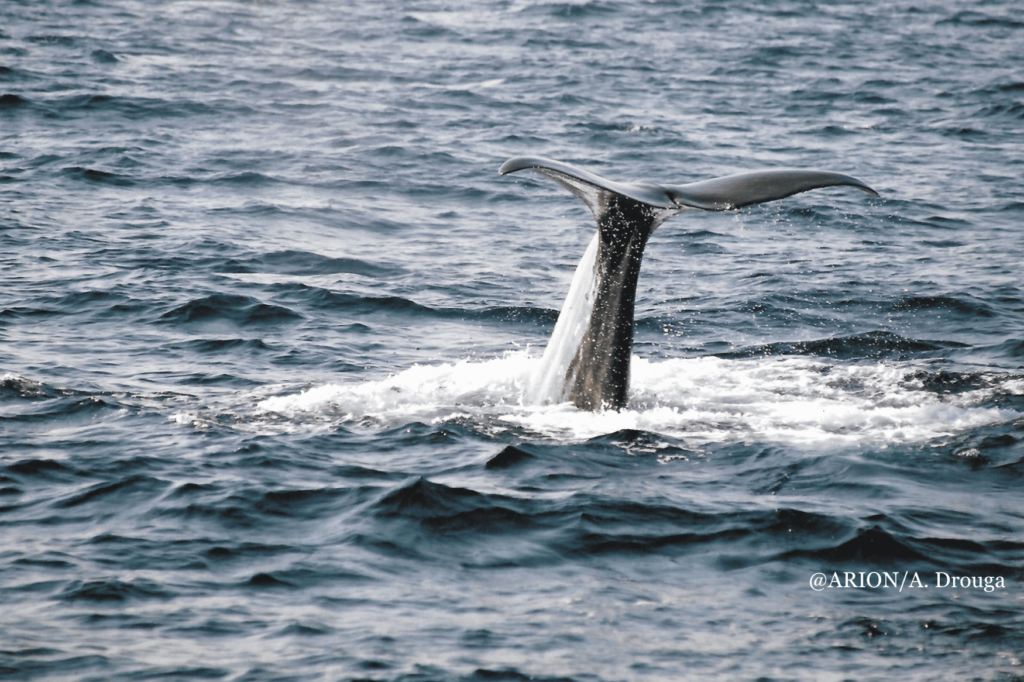
No cause for concern
Despite their impressive size, baleen whales pose no danger to humans. They have no teeth, do not exhibit aggressive behavior, and feed by filtering small fish and other small organisms through their baleen plates.
The presence of a baleen whale in the Pagasetic Gulf is most likely related to increased food availability. The Pagasetic Gulf is a particularly productive marine bay, which is regularly used as a feeding ground by many protected species of marine mammals, such as the bottlenose dolphin (Tursiops truncatus), the common dolphin (Delphinus delphis), the striped dolphin (Stenella coeruleoalba), the gray dolphin (Grampus griseus), and the Mediterranean monk seal (Monachus monachus).
Sightings of large cetaceans in Pagasitikos Gulf are not an unprecedented phenomenon. A notable example is the presence of a young humpback whale (Megaptera novaeangliae) in January 2026, which remained in the gulf for several days to feed and then left the gulf
Code of Conduct for boat operators
Citizen cooperation is particularly important for the safety of both the animal and the people
1. Keep your distance
Breaching is normal behavior and does not indicate aggression. However, bringing such a large animal back to the surface can generate strong waves that may affect small boats in particular. For this reason, it is recommended that you do not approach the whale and maintain a safe distance.
2. Slow down and follow the Code of Conduct
Boat collisions are one of the leading causes of injury and mortality among large whales worldwide. All boat operators are asked to navigate with extra caution in the area, reduce speed (to below 7 knots), avoid making sudden maneuvers when an animal is spotted, and follow the approved Code of Conduct in the Presence of Cetaceans. (https://arion.org.gr/basic-principles-of-interaction-with-cetaceans/ )
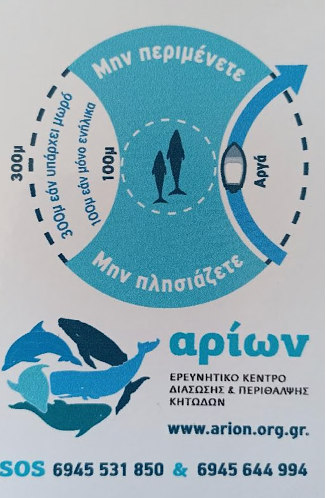
3.
Baleen whales are particularly sensitive to human disturbance and underwater noise pollution. Members of the public are asked not to attempt to approach, touch, or follow the animal, and to avoid loud noises and any actions that might cause it stress. All species of baleen whales are protected by national, European, and international law. Harassing, trapping, or killing them is strictly prohibited.
Large whales play a crucial ecological role in marine ecosystems, helping to maintain the functioning and balance of the oceans, and they are important regulators of climate change. Protecting them is the responsibility of us all.
Monitoring of the whale
The whale is being monitored by the “Coordinator of the Cetacean Stranding Management Team,” in collaboration with the Marine Mammal Biomonitoring Unit of the Department of Agriculture, Ichthyology and Aquatic Environment of University of Thessaly.
Appeal to the Public
Respecting the animal’s natural behaviour is the most important factor in ensuring its safe stay in and departure from the area. If the whale is sighted again, please notify the Volos Central Port Authority and “ARION” immediately.
In addition, to confirm the species and age group of the animal, it is particularly helpful to send photographs and video footage to the following email address: arionrescue@gmail.com
As Marie Skłodowska-Curie once said:
«Nothing in life is to be feared, it is only to be understood»
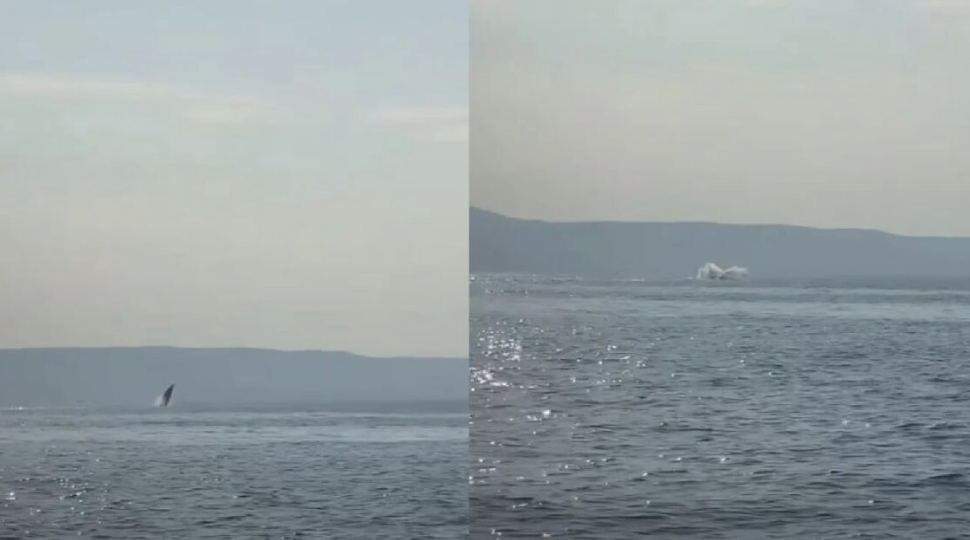
Consequently, there is no cause for concern. The responsible behaviour of citizens and boat operators, by maintaining the required distances and avoiding any form of disturbance, is the most important factor in ensuring the whale’s safe stay in the Pagasitikos Gulf and its smooth return to the open sea.
For “ARION” – Coordinator of the Cetacean Stranding Management Team (Ministry of Environment and Energy)
Dr. Elena Akritopoulou
“ARION” Research Associate
For the Marine Mammal Biomonitoring Unit, University of Thessaly
Department of Agriculture, Ichthyology, and Aquatic Environment
Assoc. Professor Georgios Gkafas
Vice Chair of the Scientific Committee of the “Nationally Coordinated Network for the Monitoring and Management of Marine Wildlife Stranding Events”.


