


‘‘ARION’’ – Cetacean Rescue and Rehabilitation Research Center, as an official Partner of ACCOBAMS (Agreement on the Conservation of Cetaceans of the Black Sea, Mediterranean Sea and Contiguous Atlantic Area), actively participated in two major international and regional scientific meetings shaping the future of cetacean conservation in the Mediterranean, the Black Sea, and adjacent Atlantic waters.
‘‘ARION’s’’participation confirms its institutional and scientific role as a key body providing applied knowledge and operational expertise in marine biodiversity conservation, including cetaceans and their habitats, while supporting Greece’s engagement within existing international conservation mechanisms and agreements.
A. 17th ACCOBAMS Scientific Committee Meeting (SC17)
Tunisia, 4–5 February 2026
‘‘ARION’’, as an ACCOBAMS Partner, participated in the hybrid 17th ACCOBAMS Scientific Committee Meeting, held in in Tunisia, where scientific priorities guiding ACCOBAMS activities for the period 2026–2028 were proposed and established.
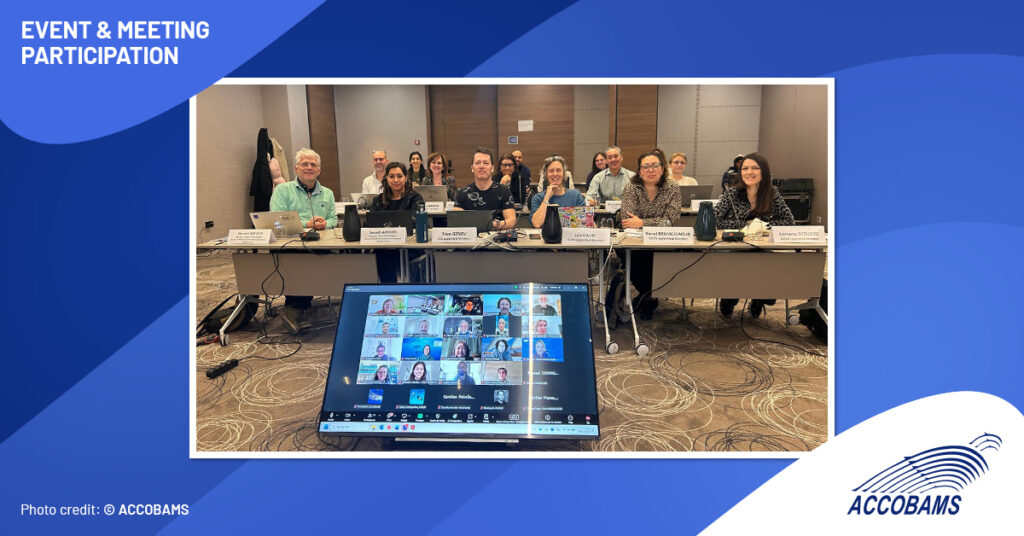
Discussions focused, among other issues, on:
- implementation of the second ACCOBAMS Survey Initiative (ASI-II), a large-scale coordinated survey assessing cetacean abundance and distribution across the Mediterranean;
- data collection on marine litter and wildlife;
- στη διευκόλυνση της ανταλλαγής δεδομένων μέσω της ψηφιακής βάσης δεδομένων θαλάσσιας βιοποικιλότητας «NETCCOBAMS»,
- reduction of anthropogenic pressures such as ship strikes, underwater noise and bycatch;
- promotion of responsible megafauna watching practices.
Within this framework, ‘‘ARION’’ delivered a scientific statement presenting the scope, continuity and strategic importance of its research and operational activities at national and regional levels. ‘‘ARION’’ has more than 25 years of scientific experience in veterinary response to wildlife strandings, particularly concerning marine mammal health and welfare management, and over 30 years of active involvement in programmes concerning management, collection and evaluation of histopathological samples from stranded cetaceans, both live and dead, as well as applied field research in the Ionian and Aegean Seas involving periodic recording, identification and long-term population monitoring.
A central element of ‘‘ARION’s’’ intervention concerned the application of innovative monitoring methodologies, including genetic analysis and environmental DNA (eDNA) as non-invasive and scalable scientific tools. Ongoing research involving ‘‘ARION’’, the Marine Mammal Monitoring Unit, Department of Ichthyology and Aquatic Environment of the University of Thessaly and the Veterinary Faculty of Aristotle University of Thessaloniki has already produced noteworthy results regarding distinct ecological patterns, highlighting the need for regionally adapted monitoring schemes and conservation strategies, particularly within Natura 2000 Marine Protected Areas.
Additionally, ‘‘ARION’’ highlighted its ongoing research programme with the Veterinary Faculty of Aristotle University of Thessaloniki in collaboration with the Marine Mammal Monitoring Unit, Department of Ichthyology and Aquatic Environment of the University of Thessaly concerning the assessment of the health status and population dynamics of the striped dolphin (Stenella coeruleoalba) and other cetacean species in the Eastern Mediterranean. The research focuses on morbidity, mortality and genetic diversity of stranded individuals along Greek and Cypriot coastlines. Necropsies and targeted tissue sampling are conducted on dead stranded animals, while clinical data and biological samples from live strandings are collected during rescue and on-site treatment operations carried out by trained veterinarians of the ‘‘ARION’’ Stranding Network. Laboratory analyses are conducted in cooperation with specialized academic and research institutions, contributing to an integrated assessment of population health and conservation status.
. ‘‘ARION’s’’ decisive contribution to the operation and strengthening of the officially established Nationally Coordinated Network for Strandings of Marine Wildlife Species, under the Ministry of Environment and Energy, was also emphasized. Through ‘‘ARION’s’’ veterinary network and specialized Cetacean Stranding Response Teams operating nationwide, comprehensive management of stranding incidents, reliable health data collection and application of internationally harmonized protocols are ensured, substantially enhancing scientific understanding of Mediterranean cetacean populations.
Finally, ‘‘ARION’’ highlighted its role as an organisation ‘hub’ for training, knowledge transfer, and collaboration with universities and research institutions both nationally and internationally, contributing to human capacity development, interdisciplinary research, and the long-term strengthening of marine mammal conservation capacity throughout the ACCOBAMS region.
(ACCOBAMS SC17 meeting info:: https://accobams.org/meetings/seventeenth-meeting-of-the-accobams-scientific-committee/, Department of Ichthyology and Aquatic Environment (University of Thessaly) : http://diae.uth.gr/ Marine Mammmal Monitoring Unit -University of Thessaly: https://www.facebook.com/p/Marine-Mammal-Monitoring-Unit-University-of-Thessaly-Greece-100086038693804/ & https://www.instagram.com/marinemammalmonitoringunituth/)
B. ASI-II Steering Committee Meeting Athens, 20–21 January 2026
As an official ACCOBAMS partner, ‘‘ARION’’ participated in person in the ACCOBAMS ASI-II Steering Committee Meeting held in Athens, bringing together leading scientific, technical and institutional bodies, including:
- UNEP/MAP – SPA/RAC,
- IUCN – Centre de coopération pour la Méditerranée
- Office français de la biodiversité – OFB
- ISPRA – Istituto Superiore per la Protezione e la Ricerca Ambientale
- ACCOBAMS Scientific Committee & ACCOBAMS Secretariat
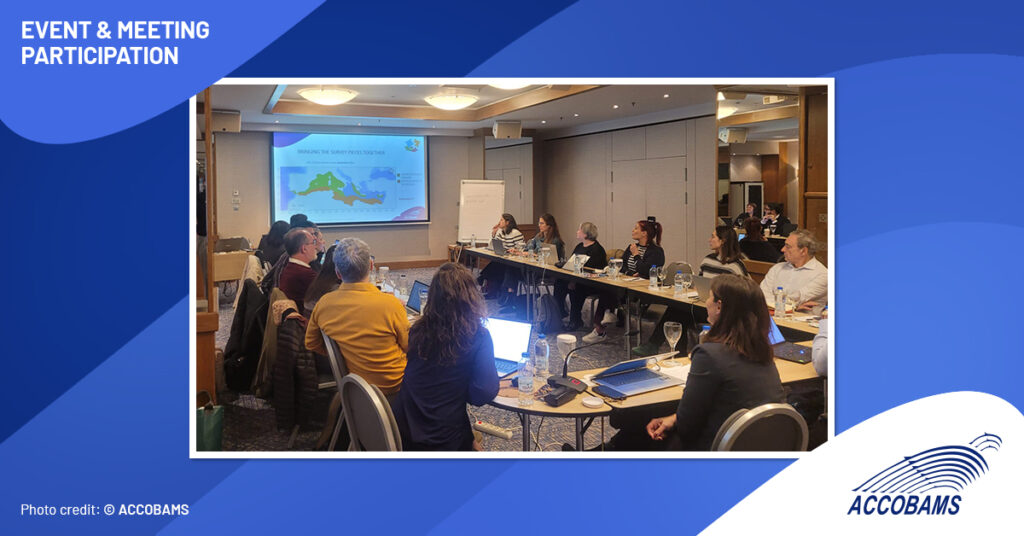
ASI-II plays a key role in complementing the Integrated Monitoring and Assessment Programme (IMAP) by directly supporting ecological objectives such as:
- EO1 – Biodiversity
- EO10 – Marine Litter
This alignment ensures that project ASI-II results directly support regional and national assessments, including the Mediterranean Quality Status Report, strengthening countries’ ability to implement the ecosystem approach.
In its official statement, ‘‘ARION’’ emphasized:
- over 25 years of field experience in the Aegean, Ionian and Cretan Seas;
- its extensive network of scientists supporting monitoring and research activities;
- its role as National Coordinator for Cetacean Stranding Management under mandate from the Ministry of Environment and Energy;
- its contribution to standardised protocols for research, rescue operations, necropsies and data collection in accordance with ACCOBAMS guidelines;
- the importance of integrating monitoring, health and stranding data for understanding and managing cetacean populations.
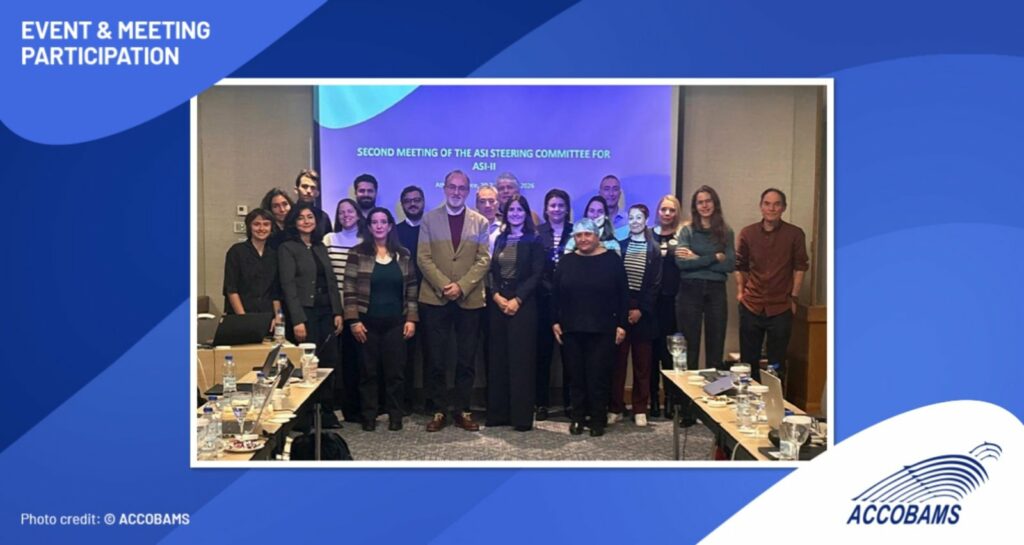
(meeting info: https://www.facebook.com/ACCOBAMSDolphinsAndWhales)
1) Institutional and Operational Role of ‘‘ARION’’ in Greece
Since 2023, ‘‘ARION’’ has officially undertaken, following designation by the Ministry of Environment and Energy (Official Gazette: 3376/B’/19-5-2023), the scientific coordination of cetacean stranding management in Greece, in cooperation with the Veterinary Faculty of Aristotle University of Thessaloniki. This includes scientific supervision of stranding incidents, coordination of rescue operations, implementation of rehabilitation protocols, necropsy procedures, and systematic collection of biological material in line with internationally recognized guidelines, including those of ACCOBAMS.
This unified framework ensures national consistency in data collection and substantially improves the quality, comparability, and scientific reliability of epidemiological and ecological assessments concerning cetaceans in Greece.
2) LIFE-IP4 NATURA& capacity building
Within the LIFE-IP 4 NATURA programme addressing marine megafauna, ‘‘ARION’’ supports the implementation of National Action Plans for two cetacean species of particular conservation importance: the harbour porpoise (Phocoena phocoena) and the common bottlenose dolphin (Tursiops truncatus). The harbour porpoise resident population in the Northern Aegean (Phocoena phocoena relicta ssp.) is extremely small and assessed as Unfavourable–Bad with a declining trend, while the bottlenose dolphin is classified as Vulnerable at the national level. The Action Plans include targeted measures concerning research, habitat protection, mitigation of fisheries interactions, institutional strengthening, international cooperation, training of competent authorities and development of local response networks for stranding events. Necessary research permits have already been secured for implementation in the Northern Aegean and the Hellenic Trench.
In parallel, ‘‘ARION’’ coordinates an extensive strengthening and training programme for the National Stranding Network through certified Marine Mammal Stranding Responder (MMSR) programmes and support points operating in the Aegean, Ionian Islands, Cyclades, Rhodes and Crete, alongside the long-running veterinary training programme Cetacean Rescue Vet, active since 2002. These activities are supported by university education and lifelong learning programmes utilizing advanced infrastructure in molecular biology, bioinformatics, histopathology, virology and ecological modelling.
In conclusion, ‘ARION’s’’ active participation in ACCOBAMS scientific and institutional processes ensures that Greece’s national priorities for marine mammal conservation are effectively incorporated into European and regional governance frameworks. Through evidence-based science, operational experience and international cooperation, ‘‘ARION’’ contributes to the development of shared Mediterranean conservation strategies, strengthening implementation of the ecosystem approach and ACCOBAMS objectives. This role enhances Greece’s position within the European and international marine conservation landscape, transforming scientific knowledge into a tool for policy development, scientific management and long-term protection of cetacean populations.
Info: Elena Akritopoulou
Email: eakritopoulou@arion.org.gr


